
The Brighthand method
Question → offer → proof.
Three layers keep the work practical. Each layer answers a different kind of buyer uncertainty.
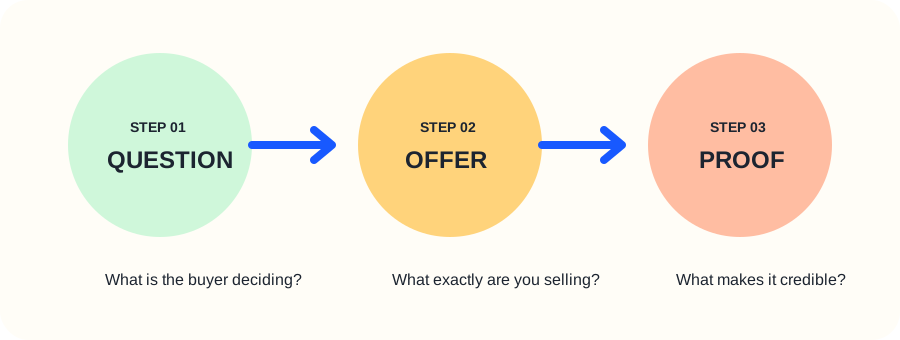
What are they deciding?
Every page becomes easier when you stop treating “the audience” as a demographic and start treating the visitor as a person making a decision.
- Do I understand what this is?
- Is it relevant to my situation?
- Is this a sensible next step?
What exactly are you selling?
The offer needs a stable center: a starting point, useful boundaries, a process, and a way to understand what changes when custom work is needed.
- Core scope
- Options
- Exceptions
Why should it feel credible?
Proof should reduce the specific risk created by the claim. If you promise care, show the process. If you promise craft, show the work.
- Process
- Examples
- Boundaries
Example
From vague capability to clear offer.
| Before | After the method |
|---|---|
| “Custom strategy and creative services tailored to your unique goals.” | “A focused positioning sprint for independent service businesses that need one primary offer customers can understand without a call.” |
| Long list of everything the provider can do. | Core deliverable first; optional/custom work separated. |
| Generic claims about expertise. | Process, samples, constraints, and decision-relevant detail. |
Why the order matters.
If you start with proof before defining the offer, you collect impressive material that may not answer the buyer’s actual worry.
If you write the offer before defining the buyer decision, the page often becomes a description of your capabilities instead of a guide to a choice.
The sequence keeps the message anchored to a decision.
See how the six modules build it